Posts

Showing posts with the label Cream Tea Duty

Send for a Stiffening Order
Image
  As I've said before - one of the things I liked about working for HM Customs and Excise was that it wasn't like being a boring civil servant. Even after the merger with the Inland Revenue to form HM Revenue and Customs - and despite the "One Civil Service" programme - there was still enough DIVERSITY in the job to make it fun. One example could be found in section 63 (1) of the Customs and Excise Management Act 1979 (and here, I have to admit that I didn't discover it myself, it was pointed out by retired Preventive Officer Ray Gregory in the Customs and Excise History Network newsletter no 31 in Spring 2012). This is the section which tells the ship's master to deliver an outward entry before any export goods are loaded - "other than goods for exportation loaded in accordance with a stiffening order issued by the proper officer.." Isn't that grand? A stiffening order . As far as I can tell that means an order to strengthen the hull of a vess...
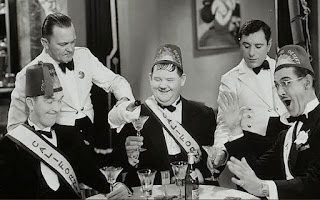
The Surtrjolk Affair: Everything you never wanted to know about the Tariff

Image
 Even Little Jack Horner would have trouble finding anything good in the Brexit pie , but one plum might be the UK Global Tariff, which replaces the EU’s Common External Tariff. If you’ve never had to import or export anything (let’s face it, that’s most of us) the Tariff is the list of the Commodity Codes for every product you might want to bring in, together with the potential rate of customs duty. Praise Mona, I never had much to do with customs duty in my day-to-day work with HMRC. I used the Tariff more to decide if products were liable to Excise Duty. If that sounds double-dutch, just remember it was the EU’s tariff! More on that later. Being British, the UK Tariff has been made easier than the EU Tariff. For a start, everything is calculated in pounds, rather than Euro’s. Percentages have been rounded down. “Nuisance tariffs” have been eliminated under the thinking that anything under 2.5% is so low it costs more to collect than the tax it brings in.  A whopping 47% of ...

HMRC - Sparkling Testimonials

Image
 Yesterday, I caught up with some of the old crew from H.M Revenue and Customs. None of us got the last day at work we'd always imagined. The pandemic and working-from-home had put the icing on the cake of the satirically named 'Building Our Future' programme of office closures. Instead of handing in our building passes and spending the afternoon across the road in the Railwayman's Arms, we'd shut down our Surface Pro's and bid a socially distanced farewell to the IT contractor who called at our homes to pick them up.  It must have been a relief to some senior managers that most of the "dead men walking" have finally left. Over the past 10 years I've noticed that once an exit programme has started, those staff are "dead" as far as senior managers are concerned. If you get included in a meeting with them, there's a sense of "are you still here?" if you have to remind them which office you're from. Especially embarrassing ...

Refer to Policy

Image
  "Refer to Policy" or "Why Can't You Answer My Question Quicker?" There comes a time in the life of every HM Revenue and Customs officer where he has to deal with Policy. There are - to say the least - several policy teams in HMRC, and the relationship between them and the ground staff is as constant as the British weather. I worked in two main areas of HMRC. As a compliance officer for Cream Tea Duty, and managing processing staff for Slap And Tickle Tax. Over the time, I got to see several different aspects of Policy.  As some accountants delight in reminding us, tax law is made by Parliament (or until recently, by the EU). One of Policy's jobs is to decide how that law can be put into practice in the real world. That could involve negotiation with trade bodies and the input of experienced compliance officers in Units of Expertise. The Units of Expertise aren't part of Policy as such, but bring practical experience, and take some of the weight off Po...

The Sheer Horror of Tax Consultants

Image
  "Why is it?" someone once asked, "that people can be perfectly reasonable when they work in the Department, and then become utter bastards as soon as they set up as tax consultants?" The only explanation I could think of was that they knew that decisions about tax were sometimes a matter of interpretation and nuance and got frustrated that they couldn't get their hands under the bonnet any more.  (Before any Pukka Sahibs  kick off to say, "it's not that way in direct tax", I'll make it clear I'm talking from the limited perspective of Cream Tea Duty). As far as interpreting the law goes, the job of an Officer in Cream Tea Duty was to say, "No you can't do that!" It was the job of the Higher Officer to then come along, stroke his chin and say, "Hmm, let's see if there's another way of looking at that." Of course, when it suited tax consultants, they'd often say, "Parliament makes the law. It's n...

HMRC - Why The Private Sector Couldn't Do It Better

Image
No-one likes sitting listening to recorded music over the phone, so I felt sorry for the bloke the other day who was saying he'd been held in an HM Revenue and Customs phone queue for over an hour. But then he said, "They're probably all sat there eating doughnuts instead of picking up the phone. They ought to privatise it!"  There's an answer about the doughnuts*. But first of all, there's the idea that the private sector could run HMRC's functions better. Here's my top five reasons why it couldn't. 5 - It's been tried before. From 1992 to 1994, the Government set up a 'Market Testing' programme, to measure Civil Service efficiency against the private sector. Customs and Excise completed 40 market tests in one year, with 90% of the in-house bids successful. In other Government departments over 12,000 jobs were cut from the state payroll by being TUPE'd out to private contractors. But the National Audit Office pointed out to MP'...

Why One Size Does Not Fit All In HMRC

Image
  I said here that HM Revenue and Customs is not an interchangeable hive like 'The Borg' off  of 'Star Trek', even if that's what the Cabinet Office aspires to. Senior managers, and the IT wide boys think they'll be able to make it happen, but first they'll have to make all the taxes and duties fit the same box. Talking from personal experience, there's a big difference between SATT (Slap And Tickle Tax) and CTD (Cream Tea Duty). There's a lot of Slap And Tickle in the world, and that means a constant stream of people liable to be registered for the Tax. By comparison, there's a relatively small pool of traders need to be registered for Cream Tea Duty. But they bring in a comparative amount of money. When it comes to registration, there are specialist teams to deal with both taxes, but with Cream Tea Duty, a compliance officer will be much more involved in getting the trader registered because there's much more needs to be confirmed about th...