Posts

Showing posts with the label HM Customs and Excise

The Press Takes A View On Customs Matters

Image
  I’ve said before that I think merging the Inland Revenue with Customs and Excise wasn’t necessarily a bad thing, but shifting the Law Enforcement side over to the Border Force helped to unbalance HM Revenue and Customs moral compass.  Even so, while researching the HM Customs on TV articles, I’ve been struck by the antagonistic attitude of the press. In 1986 the Sunday Mirror trailed The Collectors TV series by asking readers if they’d, “ever tried to smuggle a bottle of booze or packet of ciggies through the customs? And cursed the peaked-cap Customs man for an interfering busybody?” And in the Belfast News Letter, columnist Charles Fitzgerald began his review of The Duty Men by saying, “If you believe that Governments should not interrupt the free circulation of such indispensable items by imposing monstrous taxes on them and pricing them out of reach, then like me you’ll not think beating the Revenue to be much of a crime, “ and boasting, “many’s the bottle of good French...

Customs On TV 4 - The Knock

Image
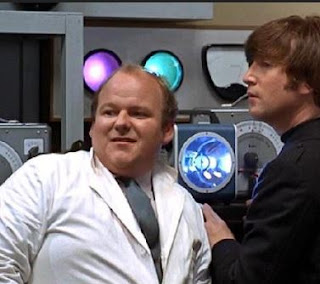
  Despite the success of the 1987 BBC documentary series, The Duty Men, the failure of the 1986 series The Collectors made it hard for the BBC was unwilling to contemplate another Customs-based drama series. Independent producer Paul Knight was looking for a follow-up to his successful ITV series London’s Burning. He told reporter Annie Leake that, “I realised there were tremendous possibilities there for a fictional series. In many cases HMCE’s powers far outreach those of the police. It’s surprising that the BBC didn’t spot the potential first.” By a strange coincidence, one of the London’s Burning directors was Keith Washington, who had also worked on The Collectors! Writer Anita Bronson based the scripts for The Knock (named after the call-sign for a raid, and consciously echoing The Sweeney) on extensive research. Inevitably, some of the scenes recall The Duty Men. A “classic-bag-switch” in the penultimate episode seems very much like a scene from the BBC series, right down to...

Customs on TV 3: The Duty Men

Image
 Fly-on-the-wall tv documentary shows are so commonplace today that it is hard to imagine what a big deal a series like The Duty Men was back in 1987 – made in the days of heavy film cameras and sound equipment in a much less open society.  While the 1986 drama series, The Collectors had proven unsuccessful for the BBC, the Corporation had an ace up its sleeve. During the same time period, documentary maker Paul Hamann was collaborating with HM Customs and Excise on the 1987 BBC2 documentary series: The Duty Men. Hamann had made over 40 documentaries for the BBC (as a producer for the BBC’s Open-Door Unit, he helped residents of Belfast’s Divis Flats in the Falls Road make a documentary about their poor housing conditions). His 1985 ‘Real Lives’ documentary about extremism in Northern Ireland was the subject of a special meeting of the BBC Board of Governors after an article by the Sunday Times resulted in Home Secretary Leon Brittan (who had not seen the film) demanding the B...

30 Years of Air Passenger Duty – Surely You Can’t Be Serious?

Image
1 November 2024 will mark the 30th anniversary of Air Passenger Duty. Hated by passengers, loved by Governments. Air Passenger Duty went live in 1994, but was introduced in 1993 by Kenneth Clarke, Chancellor of the Exchequer, who thought it was unfair that international agreements let air transport fly on fully duty rebated aviation kerosene, as a result being the only form of transport that was not taxed. As a counterbalance, Clarke brought in an excise duty collected by airlines on passengers who start their flights from the UK. It was never positioned as a ‘green’ tax. Clarke said at the time, “I need to raise revenue…in a way which does least damage to the economy.” The Finance Bill that brought in APD and Insurance Premium Tax was the largest to date, and HM Customs and Excise had not introduced taxes of such weight since the creation of VAT. The Assistant Secretary at Revenue Duties A in Manchester put in a bid to take on the new tax as, “it sounded interesting and it would help ...

Customs on tv 2 – The Collectors

Image
The Collectors was a BBC1 series which ran for 10 episodes on Saturday evenings from March to May 1986. Unlike, The Revenue Men, it focussed on the uniformed HM Customs and Excise staff based at the Custom House in a small port called Welling (filmed at Poole). Peter McEnery starred as Harry Caines, the new Surveyor at Welling District, drafted in from Heathrow Airport to sharpen up performance. “Chumminess is a thing of the past,” he warns his staff. Created by Welsh writer, Ewart Alexander (Kings Royal, Juliet Bravo) the series featured a cross-section of characters. Michael Billington (UFO, The Onedin Line) played Tom Gibbons, a Higher Executive Officer, resentful at being passed over for the Surveyor’s job and placating a rich and spoilt young wife (Karen Drury, later of Brookside). Jack McKenzie played bearded HEO Calvin Simpson, never happier than when aboard his Customs launch, The Seal. Lois Butlin (Grange Hill) was Alyson Bentley , horse riding, fast-driving Executive Of...

Customs on TV - The Revenue Men (1967-68)

Image
   Ewen Solon, Callum Mill and James Grant The Revenue Men was a 1960’s BBC series about the Scottish division of HM Customs and Excise’s Investigation Branch. It was made in the tradition of Forbidden Cargo (1954), based on fact but told in a style which captured the imagination of the public. As the publicity for the series explained, “the emphasis is new. This is a realistic series which does not find smuggling romantic, which presents the men of Customs and Excise as the guardians of purchase tax and exchange control regulations, as the collectors of vast sums in indirect taxation, as those who come to grips with the 'cheaters' of international finance, with the traffic in illegal drugs, with whisky hi-jackers, and with the routing of strategic cargoes to forbidden countries.” The series dealt with The Investigation Branch (IB) rather than uniformed waterguard at ports, harbours and airports or the Outdoor Branch checking on fuel and spirits tax. Publicity said, “ IB offic...

Customs Movies: River Patrol and Forbidden Cargo

Image
  Looking at how HM Customs and Excise was portrayed in the movies, the list is relatively small. I can only think of two. River Patrol. 1948. One of the earliest post-war Hammer Films, it was written by film editor James Corbett and directed by Ben R. Hart. Made at Marylebone Studios (appropriately, a deconsecrated church) it stars cheeky John Blythe as Robby Robinson, a Waterguard officer who sees one of his crew shot and murdered during an interception on the Thames. When the smugglers cruiser opens fire with a machine gun, Robinson retaliates with an automatic pistol! Not sure that 20th century Waterguard officers were ever officially entitled to bear arms, but maybe the pistol was a souvenir Robby brought back from the war. Unfortunately, the film veers into Harry Enfield territory in a statically directed scene where Robby returns to headquarters and turns off the wireless in the canteen to mourn his colleagues death. Hungry for revenge, Robby is teamed with Jean Nichols (Lo...

Border Force Cutters Delayed to 2030 - and HMCE Customs Cutters move to full time crews in 1998

Image
 Earlier this week, The Times revealed that plans for five cutters and six patrol vessels to replace the current Border Force fleet have been delayed until 2030 due to post-Brexit trading rules. After Britain left the EU in 2020, it signed up to World Trade Organisation rules which state that Government contracts must be open to international competition. Instead of excluding construction of civilian ships from the list, trade secretary Liz Truss replicated the EU’s terms of accession to the EU with the only exemption being warships. Truss is blaming her predecessor, the disgraced Sir Liam Fox.  The current cutters were built in the Netherlands, commissioned by HMCE in 2001, and transferred to UK Border Agency (as was) in 2005. Procurement of replacements has been repeatedly delayed since 2020. The fleet must now be redesigned to include military modifications, so that the vessels can be made in British shipyards. The use of cutters on Customs duties dates back to the 1600’s b...

Staff Appraisal: the big middle rank of “Good”

Image
 The first time I ventured into line management for HM Customs and Excise (as was), my outgoing manager made me a gift of a 1973 civil service textbook on staff reporting. As I’d always been the schoolboy, creeping like snail to appraisals, he obviously thought I needed the help. Even though HMCE (and later HMRC) had training materials, I don’t think any of it rivalled the clarity and unsentimentality of the 1973 booklet. Published by the Personnel Management (Training) Division of the Civil Service Department, it was an attempt to standardise Staff Reporting throughout the Civil Service. 750 draft copies were tested at all grades and departments before the programmed textbook was issued. While self-instruction was a new concept viewed with suspicion in comparison to formal learning, given time and staff hours the booklet judged the best way to roll the system out to over 150,000 reporting officers. The booklet sets out the general principles that staff reporting allows the organis...

Confessions of a Jobsworth

Image
  In the past few weeks, as refugees are turned away and charity shipments to the Ukraine get stalled at the borders because they don’t have customs paperwork, the term “jobsworth” has been slung around at the Home Office, Border Force and HMRC (and private contractors).  Now that things have calmed down a bit, it’s made me look back at being a “jobsworth”. I’ve just done a bit of research and found that the term became popular in the 1970’s when Esther Rantzen used to present a “Jobsworth of the Week” award on her TV show, That’s Life. The idea seems to be that a “jobsworth” is not just someone who rigidly applies the rules (as their contract of employment requires) but that they gleefully take the most rigid and obstructive interpretation of those rules, just to make life difficult. A lot of the folk who shout “jobsworth” do it when they’re wound up. Give them five minutes to calm down, and they’d admit it was unreasonable. But there are others who seem to have a Donald Trum...

Send for a Stiffening Order

Image
  As I've said before - one of the things I liked about working for HM Customs and Excise was that it wasn't like being a boring civil servant. Even after the merger with the Inland Revenue to form HM Revenue and Customs - and despite the "One Civil Service" programme - there was still enough DIVERSITY in the job to make it fun. One example could be found in section 63 (1) of the Customs and Excise Management Act 1979 (and here, I have to admit that I didn't discover it myself, it was pointed out by retired Preventive Officer Ray Gregory in the Customs and Excise History Network newsletter no 31 in Spring 2012). This is the section which tells the ship's master to deliver an outward entry before any export goods are loaded - "other than goods for exportation loaded in accordance with a stiffening order issued by the proper officer.." Isn't that grand? A stiffening order . As far as I can tell that means an order to strengthen the hull of a vess...